First-Time Buyer Conveyancing Mistakes to Avoid | KLR
Avoid costly delays, unexpected expenses, and common legal pitfalls by understanding the mistakes first-time buyers frequently make during the conveyancing process.
What Are the First-Time Buyer Mistakes to Avoid During the Conveyancing Process?
Article summary:
- Many first-time buyers face avoidable delays by waiting too long to instruct a solicitor or return paperwork.
- The cheapest conveyancing quote is not always the best choice; service levels, lender panel status, and hidden disbursements all matter.
- A mortgage valuation is not a survey; skipping a survey to save money can prove far more costly after completion.
- Exchange of contracts is the point at which the transaction becomes legally binding; buyers should not commit to moving costs before that stage.
- First-time buyers in England currently pay no Stamp Duty Land Tax on the first £300,000 of a purchase price, following the March 2025 threshold change.
- Good preparation, prompt communication, and early legal advice significantly reduce the risk of delay, unexpected costs, or a poor buying decision.
The legal process of transferring ownership can take between eight and sixteen weeks. However, by understanding what can go wrong and the common mistakes made by buyers, you can reduce the overall time to completion. The reality is that too many buyers misunderstand the process, misread professional advice, or make assumptions that later prove expensive. This article explains some of the most common conveyancing mistakes first-time buyers make in England and Wales, explains what each one means in practice, and offers clear guidance on how to protect yourself at every stage of the process.
What is conveyancing and why does it matter for first-time buyers?
Conveyancing is simply the legal process of transferring ownership of a property from seller to buyer. It covers everything from checking the seller's legal title, ordering property searches, and reviewing the mortgage offer, through to exchanging contracts and completing the purchase. For a first-time buyer, it is also the stage at which assumptions can become expensive. A property may feel right during a viewing, but the legal documents, search results, and survey findings may reveal restrictions, obligations, structural problems, or future costs that were not visible at the time. This is why conveyancing exists: to give the buyer a proper legal picture of what they are acquiring before they are legally committed to buying it.
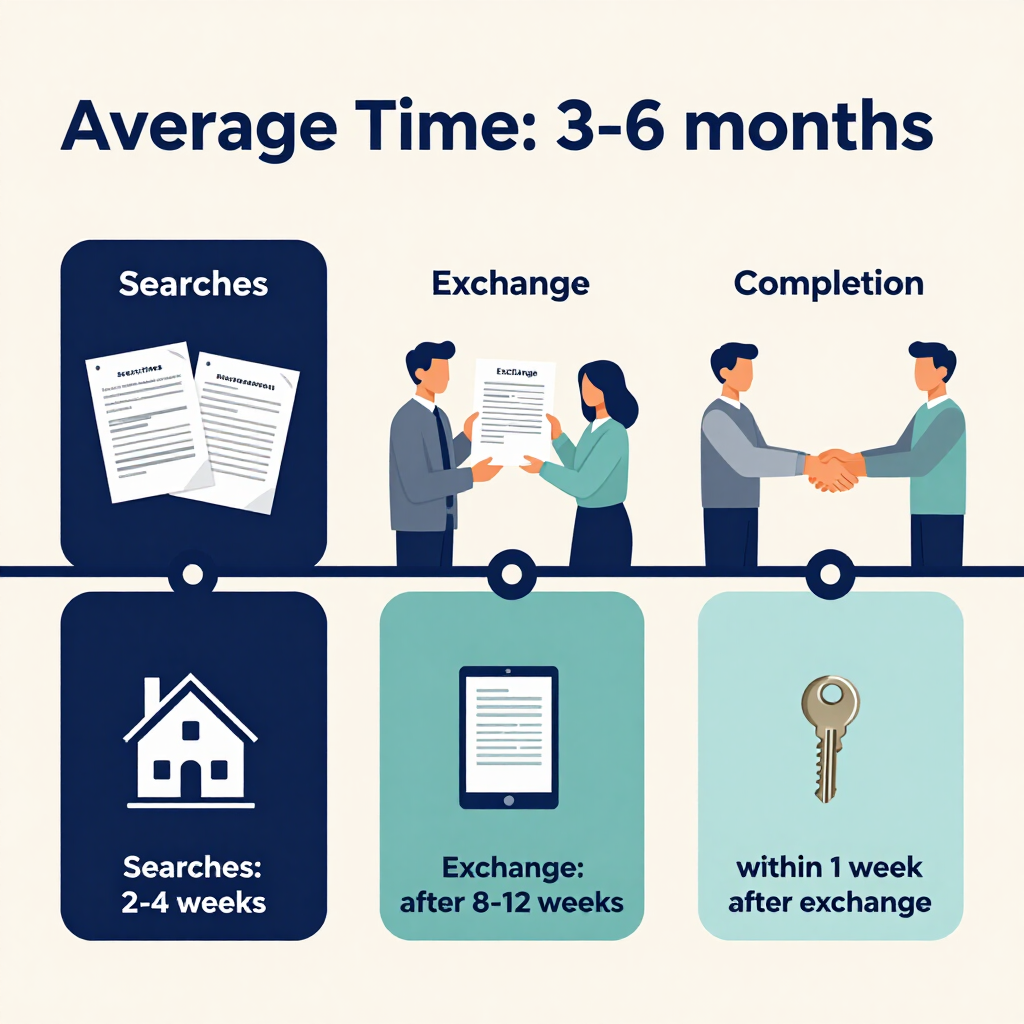
A straightforward purchase in England and Wales typically completes within eight to twelve weeks of instruction, though leasehold properties, chains, and complex titles can take considerably longer. Understanding what happens at each stage and preparing for it makes the process significantly smoother.
Mistake 1: Instructing a solicitor too late
One of the most avoidable mistakes is waiting until after an offer is accepted before thinking about instructing a conveyancer. Starting late means your solicitor cannot begin identity checks, funding verification, or drafting until after other parties in the chain have already made progress, and that gap can cause real delays.
Ideally, you should research and choose a conveyancing solicitor before you make an offer. At the very least, instruct them as soon as the offer is accepted. Ensure you have the following ready to provide without delay:
- Proof of identity and address for all buyers (passport, driving licence, utility bills).
- Evidence of where your deposit is coming from, including bank statements.
- Details of any gifted deposit and the donor's identity documents.
- Mortgage decision in principle or confirmation that an application is underway.
Delays in returning forms and documents are one of the most common causes of slow transactions. Your solicitor cannot begin substantive work until anti-money laundering checks are complete and initial instructions confirmed.
Mistake 2: Choosing a conveyancer on price alone
A low headline fee can look attractive, but it rarely tells the whole story. Many firms add charges for acting on behalf of your mortgage lender, dealing with a leasehold title, handling a gifted deposit, carrying out bank transfers, or corresponding with a management company. These disbursements and additional fees can significantly increase the final bill.
When comparing quotes, check the following carefully:
- Whether the fee is genuinely fixed or subject to additional charges for standard work.
- Whether the firm is on your mortgage lender's approved conveyancing panel.
- Who will actually handle your file day to day, and how quickly they typically respond.
- What the quote includes in terms of searches, Land Registry fees, and Stamp Duty Land Tax filing.
- Whether there are additional charges for leasehold work, new build checks, or shared ownership requirements.
Communication matters as much as cost. A solicitor who keeps you informed throughout will almost always save you money in the long run by catching problems early and keeping the transaction moving.
Mistake 3: Confusing a mortgage valuation with a survey
Many first-time buyers assume that because the mortgage lender has carried out a valuation, the physical condition of the property has been properly checked. It has not. A mortgage valuation is carried out primarily for the lender's benefit, to confirm that the property is suitable security for the loan. It says very little about the condition of the building itself.
An independent survey is a separate exercise, carried out for your benefit. The main options available in England and Wales are:
- RICS Level 2 (HomeBuyer Report): suitable for conventional properties in reasonable condition; covers visible defects, risks, and issues requiring investigation.
- RICS Level 3 (Building Survey): a more thorough inspection suited to older, larger, extended, or unusual properties; provides greater detail on structure and condition.
Skipping a survey to save a few hundred pounds is a risk that frequently proves very costly after completion. Problems such as damp, roof defects, subsidence, or poor-quality alterations may not be visible during a viewing but will become your responsibility once you own the property. The survey report also provides an opportunity to renegotiate the purchase price if significant defects are found.
Mistake 4: Misunderstanding searches and enquiries
Property searches are legal investigations carried out by your solicitor into the property and surrounding area. They are not the same as a survey, and they cover different ground. The standard searches in a residential purchase include:
- Local authority search: reveals planning history, enforcement notices, road schemes, conservation area status, and other matters recorded by the local council.
- Water and drainage search: confirms whether the property is connected to the public sewer and water supply, and whether any public sewer runs under or near the property.
- Environmental search: identifies flood risk, ground contamination, landfill sites, and former industrial use near the property.
- Chancel repair search: checks whether the property might be liable for historical contributions to the repair of a local church chancel.
In addition to searches, your solicitor will raise written enquiries with the seller's solicitor about the legal title, boundaries, disputes, planning consents, building regulations approvals, and any other matters arising from the documents. First-time buyers sometimes assume that enquiries are a formality; in practice, the replies can reveal information that affects whether to proceed, at what price, and on what terms.
Read the search results and enquiry replies carefully with your solicitor's explanation to hand. If something is unclear, ask.
Mistake 5: Overlooking the implications of buying leasehold
Leasehold ownership is common in England and Wales, particularly for flats. When you buy a leasehold property, you own the property for the length of the lease granted by the freeholder, rather than owning the land outright. Leasehold ownership carries obligations and costs that freehold ownership does not, and first-time buyers sometimes underestimate these before proceeding.
Before committing to a leasehold purchase, you should understand:
- How many years remain on the lease; most mortgage lenders will not lend on a lease with fewer than around 70 to 85 years remaining, and a short lease reduces resale value.
- The current ground rent, and whether it is fixed or subject to review or escalation.
- The current service charge and what it covers, including any recent or anticipated major works.
- Whether a reserve or sinking fund exists, and its current balance.
- The terms under which the lease can be extended and the likely cost of doing so.
Under the Leasehold Reform (Ground Rent) Act 2022, ground rents for new residential leases in England and Wales are now restricted to a peppercorn (effectively zero). However, existing leases may still carry ground rent obligations, and buyers should understand what they are taking on. If the lease requires extending, the process and cost should be investigated before the exchange of contracts, not after.
Mistake 6: Underestimating the total cost of buying
The purchase price and deposit are only part of the financial picture. First-time buyers frequently underestimate the additional costs involved, which can create real pressure at the point of completion if funds are not prepared in advance.
The main additional costs to budget for include:
- Solicitor's legal fees and disbursements (searches, Land Registry fee, bank transfer fees).
- Survey fees, which vary depending on the level of survey and the size of the property.
- Stamp Duty Land Tax: as of April 2025, first-time buyers in England pay no SDLT on the first £300,000 of a purchase price, with 5% on the portion between £300,001 and £500,000. Properties over £500,000 do not attract first-time buyer relief. These thresholds replaced the temporary rates that were in place until March 2025.
- Mortgage arrangement fees, broker fees, and any product fees charged by the lender.
- Buildings insurance, which must usually be in place from the exchange of contracts.
- Removal costs, utility connection costs, and any immediate repair or decoration work.
If your deposit involves a gift from a family member, your solicitor will need to verify the source of those funds as part of their anti-money laundering obligations. A formal gifted deposit letter, along with bank statements showing the origin of the funds, will usually be required by both your solicitor and your mortgage lender. Preparing this documentation early avoids delays at a critical stage.
Mistake 7: Moving too fast around the exchange of contracts
Exchange of contracts is the point at which the transaction becomes legally binding on both the buyer and the seller. Before exchange, either party can withdraw without legal liability, though the buyer may lose the cost of searches, surveys, and solicitor's fees already incurred. After exchange, failure to complete on the agreed date can result in significant financial penalties.
Common mistakes around exchange include:
- Giving notice on a rental property before exchange has taken place, leaving you without somewhere to live if the deal falls through.
- Booking non-refundable removal services based on an anticipated completion date rather than a confirmed one.
- Agreeing to exchange without fully understanding the title, the search results, the survey implications, or unresolved enquiries.
- Not checking what fixtures and fittings are included in the sale price.
- Assuming that a verbal agreement on a completion date is binding before contracts have actually been exchanged.
Your solicitor should provide you with a report on title before exchange, summarising the key findings from the legal investigation. Read it carefully. If anything is unclear, ask for an explanation before authorising exchange. This is the stage at which any remaining concerns must be raised and resolved.
Mistake 8: Failing to protect against conveyancing fraud
Conveyancing fraud, particularly so-called Friday afternoon fraud or authorised push payment fraud, has increased significantly in recent years. This is where criminals intercept communications between buyers and their solicitors and substitute fraudulent bank account details for the solicitor's genuine details, causing buyers to transfer their deposit or completion funds to a fraudster's account.
To protect yourself:
- Always verify your solicitor's bank account details by telephone using a number you have independently confirmed, not a number given in an email.
- Never transfer large sums in response to an email, even if it appears to come from your solicitor; always call to verify first.
- Be alert to any last-minute change in bank details from your solicitor; this is a classic warning sign of fraud.
- Ask your solicitor about their verification procedures for sending bank account information.
If you transfer funds to a fraudulent account and cannot recover them, you will still be liable to complete the purchase. The financial consequences can be devastating. Vigilance at this stage costs nothing; the consequences of not being vigilant can be severe.
Final words
Buying a first home in England or Wales is one of the most significant financial decisions most people will ever make. The conveyancing process is there to protect buyers from legal and financial risks that are not visible during a viewing, and it works best when buyers engage with it actively rather than treating it as an administrative formality.
Most of the mistakes outlined in this article have one thing in common: they arise from a lack of preparation or a reluctance to ask questions. Instructing a good solicitor early, reading the documents you are sent, and taking professional advice seriously at each stage will put you in the strongest possible position to exchange and complete with confidence.
FAQS
Do I need a solicitor to buy my first home?
Yes, if you are buying with a mortgage, your lender will require a solicitor or licensed conveyancer to act on its behalf as well as yours. Even cash buyers benefit greatly from professional conveyancing; the legal risks of managing a property purchase without specialist advice are significant.
Is the cheapest conveyancing quote always the best option?
No, the lowest quote does not always represent the best value. Lender panel status, communication standards, and the transparency of the fee structure all matter. Always ask for a full breakdown of costs, including disbursements, before instructing.
Do I really need a survey if the property looks well maintained?
Yes, a survey is strongly advisable even where a property appears to be in good condition. Problems such as damp, roof defects, structural movement, or poorly executed building works are frequently invisible during a viewing. The cost of a survey is modest compared with the cost of discovering serious defects after completion.
What is the current Stamp Duty Land Tax position for first-time buyers?
As of April 2025, first-time buyers in England pay no SDLT on the first £300,000 of a purchase price, with 5% payable on the portion between £300,001 and £500,000. Properties priced above £500,000 do not attract first-time buyer relief. These thresholds should be verified with your solicitor, as SDLT rules can change.
Can I book removals before exchange of contracts?
It is advisable to wait until exchange has taken place before booking any non-refundable services. Before exchange, the transaction is not legally binding and the completion date can still change. Booking too early can result in wasted expenditure if the transaction falls through or the date moves.
What should I do if I receive an email telling me to transfer money to a new bank account?
Stop and call your solicitor immediately on a number you have independently verified, not a number provided in the email. Fraudsters routinely impersonate solicitors and issue false payment instructions. Your solicitor should never change bank account details without prior telephone confirmation, and you should never transfer funds without verbally verifying the account details first.
What happens during the period between exchange and completion?
Once contracts are exchanged, both parties are legally bound to complete on the agreed date. You should arrange buildings insurance for the property from exchange, ensure your mortgage funds are confirmed and available, and prepare for the practical aspects of moving. Your solicitor will request the mortgage advance from your lender in time for completion day.