Leasehold vs Freehold: Buyers Guide | KLR Solicitors
Understanding Property Ownership, Costs, Lease Lengths and Legal Considerations Before Buying a Home in England and Wales
What Is The Difference Between Leasehold and Freehold Property?
Freehold usually gives you ownership of the home and its land for an unlimited period. Leasehold gives you the right to occupy the property for the unexpired term of a lease. In England and Wales, your safer choice depends on four factors: the remaining term, continuing charges, title restrictions and management arrangements. Your conveyancer should verify each before exchange because tenure can affect mortgage approval, permitted use, ongoing cost and resale.
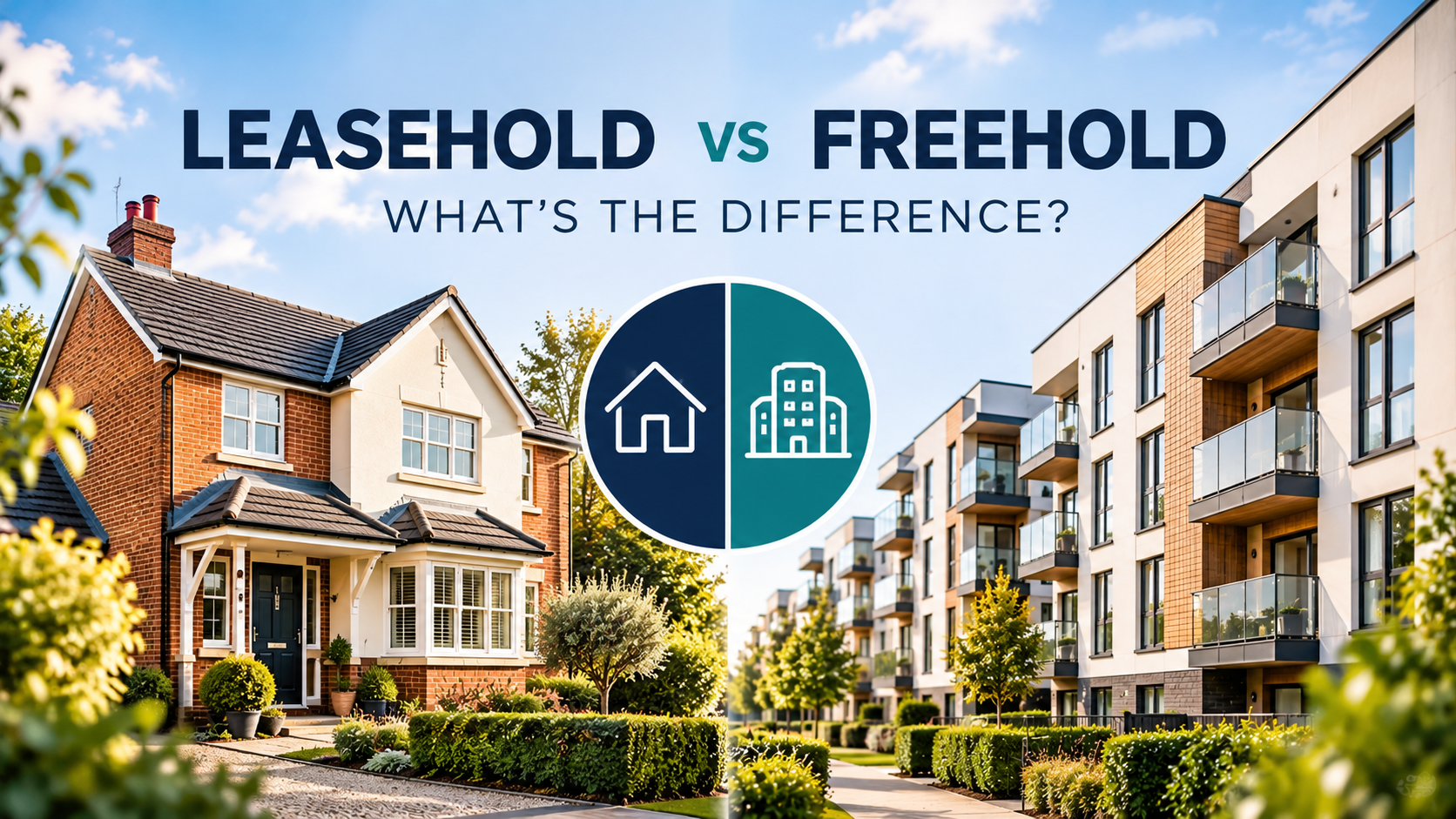
When you buy a property in England and Wales, it will usually be sold as either freehold or leasehold. Freehold means you normally own the property and the land indefinitely or until you sell it. Leasehold means you own the right to occupy the property for the remaining term of the lease.
The type of ownership can affect your ongoing costs and mortgage options. It can also limit how you use the property. Leasehold buyers may have to pay service charges or ground rent, while some freehold homes are subject to estate charges and restrictive covenants.
This article explains how freehold and leasehold ownership work. It also sets out the costs and restrictions to check before you exchange contracts.
How do freehold and leasehold tenure work?
Under section 1 of the Law of Property Act 1925, the two legal estates are a fee simple absolute in possession and a term of years absolute. For a homebuyer, the first broadly corresponds to freehold and the second to leasehold. A lease gives you exclusive possession for its fixed term, subject to its covenants.
With a freehold, you usually own the building and land indefinitely or until you decide to sell. The title may reserve rights to neighbouring owners or impose restrictive covenants. With a leasehold, the freeholder holds the superior title. The lease sets out your rights and repair duties. It also records your payment obligations and restrictions.
The HM Land Registry title summary identifies whether registered property is freehold or leasehold.
The title register records ownership and registered burdens. A lease contains further terms that govern a leasehold home.
Leasehold ownership is common. The Ministry of Housing, Communities and Local Government’s 2026 official statistics estimated 4.90 million leasehold dwellings in England during 2024 to 2025, equal to 20% of the housing stock.
What are the costs associated with freehold and leasehold?
Your likely costs depend on both tenure and the title terms. A freeholder normally meets the full cost of insuring and repairing the property. A leaseholder may pay service charges and administration fees. Some leaseholders also owe ground rent. Freehold owners on private estates may contribute towards shared facilities.
Service charges may fund building insurance and communal maintenance. Ask for the recent accounts and current budget. You should also check the reserve fund position and proposed major works. The latest annual demand may not show the full exposure if expensive repairs are planned after completion.
Section 19 of the Landlord and Tenant Act 1985, states that relevant costs count “only to the extent that they are reasonably incurred”. Services or works must also be of a reasonable standard. You may be able to ask the appropriate tribunal to decide whether a disputed variable service charge is payable.
For most regulated leases granted from 30th June 2022, section 4 of the Leasehold Reform (Ground Rent) Act 2022 limits the permitted rent to one peppercorn each year. The commencement date for retirement-home leases was 1st April 2023. An older lease may still include a monetary ground-rent clause, so check the amount and review the formula.
Why does the length of the lease matter?
When you buy a leasehold property, you take over the years remaining on the existing lease. The lease does not start again when the property is sold.
A shorter lease can make the property harder to mortgage and sell. In particular, lenders are often less willing to lend when a lease has fewer than 80 years remaining. Extending the lease can also become considerably more expensive once it reaches this point, although every lender has its own rules. Government guidance explains how the remaining lease term can affect a property purchase.
Before exchanging contracts, ask your conveyancer to:
- Confirm exactly how many years are left on the lease.
- Check that the lease meets your lender’s requirements.
- Explain your options for extending it.
- Help you establish the likely total cost, including valuation and legal fees.
Depending on the circumstances, the seller may be able to begin the formal lease-extension process so that you can continue it after buying the property. Alternatively, you may be able to negotiate a lower purchase price. Take advice from a specialist lease-extension valuer before agreeing to either option.
Planned changes to leasehold law will not affect your purchase unless they have come into force and apply to your particular circumstances.
Which restrictions should I check?
The lease may restrict how you use the home. Before exchange, compare its clauses with your plans for alterations or letting. Check any rules about pets and the fees for obtaining consent. If the seller carried out work without required approval, ask for the issue to be resolved before you become bound.
A share of freehold does not usually replace the lease. You normally acquire the leasehold flat plus a share in a company or a separate interest in the freehold. Resident control may improve management, but the lease term and covenants still apply.
Freehold ownership can also come with restrictions and ongoing payments. Owners on some estates pay for private roads or open spaces. Government guidance on freehold estates confirms that management charges may cover shared areas. Your title may also restrict extensions or particular uses.
What should I check before exchange?
Before exchange, you should have written answers on the title and every continuing payment. Your conveyancer should also confirm whether the property satisfies your lender’s instructions. Unresolved defects may affect how you use the home or sell it later, so raise enquiries while you can still negotiate or withdraw.
- Confirm the title extent and the rights available for access or parking.
- Check the remaining term, ground-rent amount, review formula and lender approval.
- Review service-charge accounts, the current budget, reserve funds and major-works notices.
- Examine insurance arrangements, repair obligations, building-safety information and reported disputes.
- For a freehold, investigate estate charges, management documents, adoption of services and restrictive covenants.
Do not rely on the sales description or a verbal assurance. Your title report should explain the practical effect of the documents in plain English. Ask for clarification before you authorise exchange if any cost or restriction remains unclear.
Frequently asked questions
Is share of freehold the same?
No, you usually buy a leasehold flat plus a share in the freehold company or a separate freehold interest. The lease still governs your occupation and payments. Check its remaining term and covenants even where residents control the freehold.
Can I buy a leasehold if the length of the lease is shorter than 80 years?
Possibly, although the lease may be unacceptable to your chosen lender and harder to sell later. Ask your conveyancer to check the lender’s criteria before exchange. You should also obtain advice on extension rights and likely costs, then reflect those figures in your decision or negotiations.
Can I challenge a service charge?
You may be able to challenge whether a variable service charge is payable or reasonable. Section 19 of the Landlord and Tenant Act 1985 limits relevant costs to those reasonably incurred and requires a reasonable standard of work or services. Obtain advice before withholding payment because the lease may permit enforcement action.
Final words
When buying a property, clear legal advice before exchange can identify issues such as a short lease or unexpected freehold charges while you still have choices about whether to complete the purchase.
KLR Solicitors’ residential conveyancing team can review the title, lease, management information, and searches before you become committed.
For a free consultation about buying a freehold or leasehold home, call 020 8300 6666.
Last reviewed October 2026