How Long Does Conveyancing Take in 2026? | KLR Solicitors
Find out how long buying or selling a home takes in England and Wales in 2026, including searches, exchange, completion and common delays.

Article Summary
- You can expect a chain-free freehold purchase to complete in around eight to twelve weeks, and a leasehold or chained purchase to take twelve to sixteen weeks or longer.
- Local authority searches are usually the slowest step and can take from a few days to several weeks, depending on your council.
- You must pay any Stamp Duty Land Tax due and file your return within 14 days of completion, or HMRC can charge penalties and interest.
- Missing a mortgage offer deadline or a chain delay can push your exchange date back by weeks, so keeping your solicitor updated on any changes protects your position.
- Registering your ownership at HM Land Registry after completion currently takes around four to six months for a standard transfer. While full legal ownership officially transfers only when registration is complete, your transaction's priority is fully protected in the meantime.
An estate agent has just told you your offer has been accepted, and the question you actually want answered is how long you now have to wait before you can collect the keys. The honest answer depends on factors outside your control: how quickly the seller's solicitor sends the contract pack, how long your council takes to return searches, and how many other sales sit ahead of yours in the chain. A cash purchase with no chain can complete in six weeks. A leasehold flat behind three other sales can take four months or more. Here we set out what happens at each stage, how long each step typically takes, and what you can do to avoid being the reason for a delay.
What are the main stages of conveyancing?
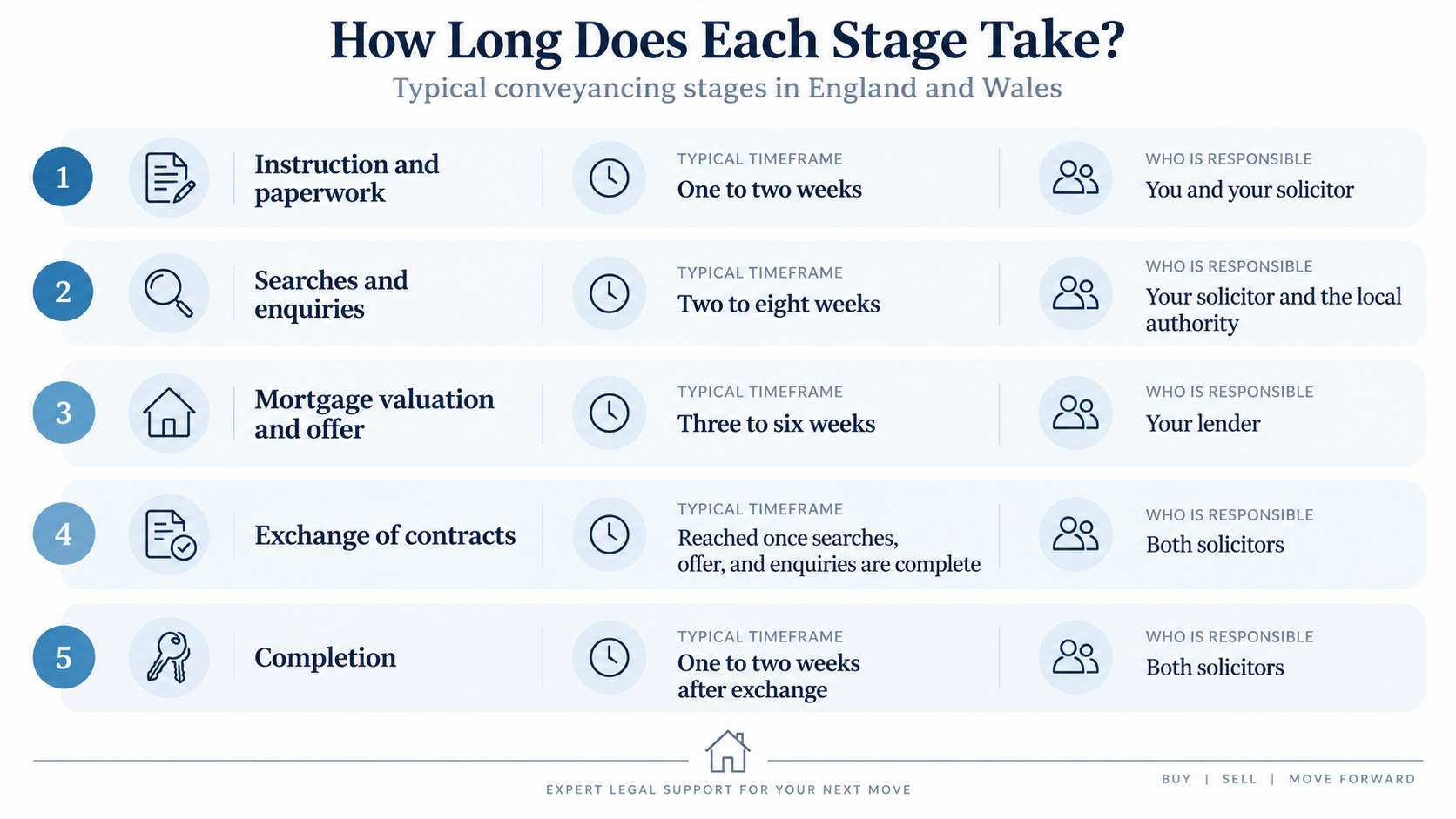
A residential purchase in England and Wales moves through five stages:
- Instruction and paperwork - your solicitor will open the file, carries out anti-money laundering checks, and requests the draft contract from the seller's solicitor.
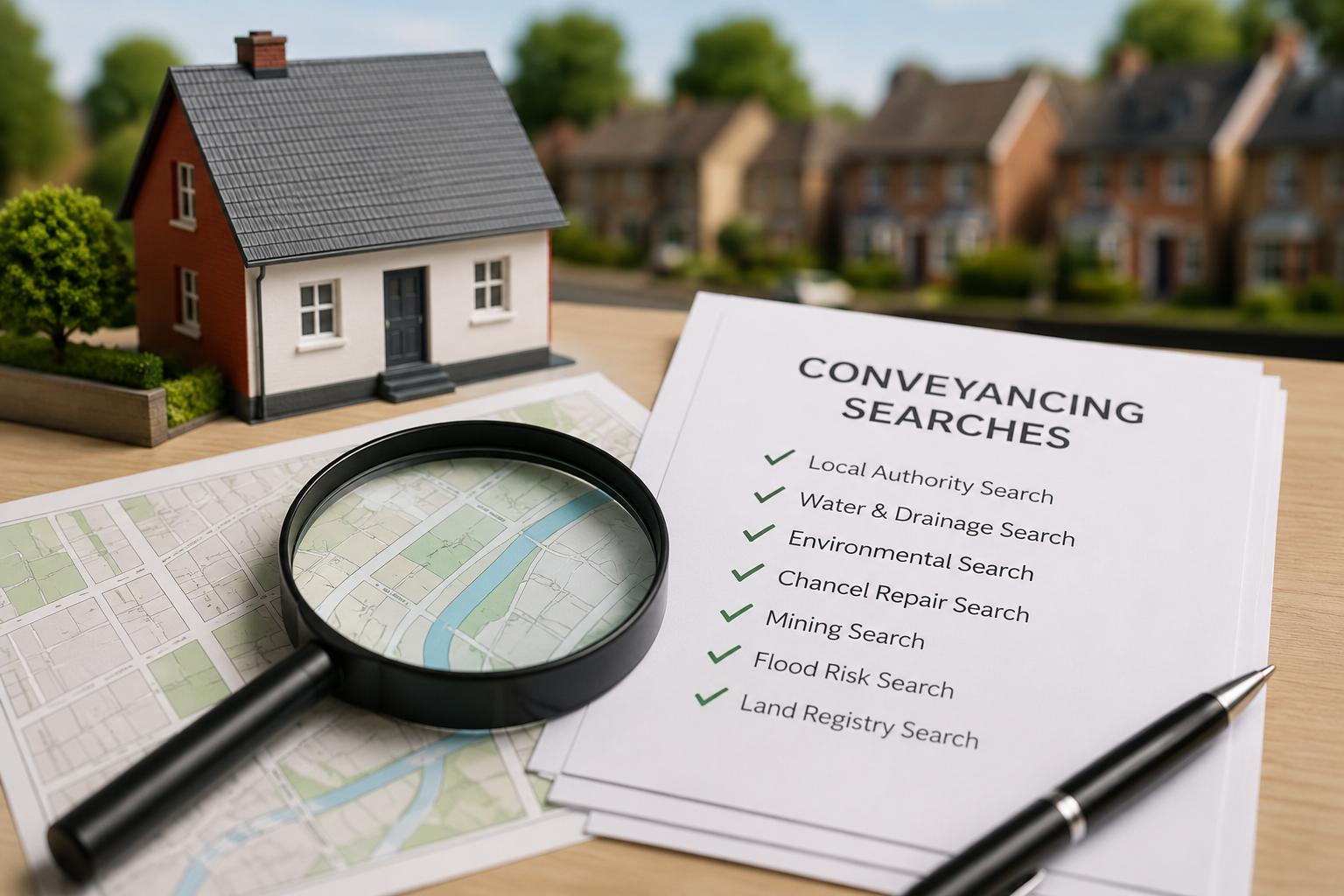
- Searches and enquiries,
- Mortgage offer,
- Exchange of contracts, and
- Completion.
The Law Society's Conveyancing Protocol sets out the steps solicitors follow when acting for buyers and sellers of residential property, and most firms in England and Wales, including our own team, work to it.
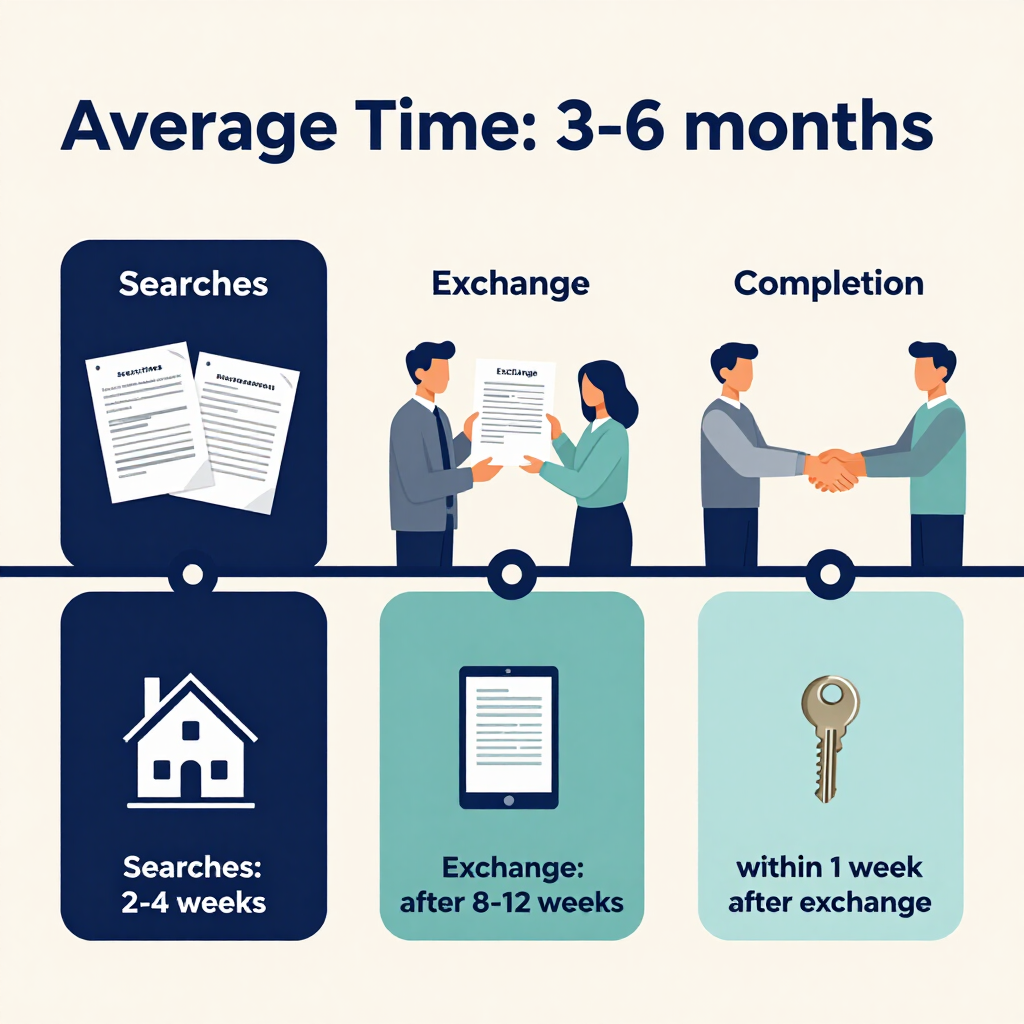
How long does each stage take?
The following sets out how long each stage takes and who is responsible for:
What is exchange of contracts and why does it bind you?
Exchange of contracts is when your purchase becomes legally binding, and neither side can withdraw without financial consequences. Under section 2 of the Law of Property (Miscellaneous Provisions) Act 1989, a contract for the sale of an interest in land must be in writing, incorporate every term the parties have agreed, and be signed by or on behalf of each party. In practice, your solicitor and the seller's solicitor exchange identical signed contracts by telephone, at which point you pay your deposit, typically 10 per cent of the price, and a completion date is fixed.
This means withdrawing after exchange without a valid legal reason can mean losing your deposit and being sued for the seller's additional costs. Before exchange, either side can walk away without penalty, so nothing is guaranteed until contracts are formally exchanged.
What happens between exchange and completion?
Completion usually follows exchange by one to two weeks, giving both sides time to arrange removals and transfer funds. On completion day, your solicitor sends the remaining balance to the seller's solicitor, the seller's solicitor confirms receipt, and you are given the keys once your solicitor tells the estate agent the money has arrived. Same-day completion, where exchange and completion happen together, is possible but leaves no buffer if a payment is delayed, so most solicitors advise against it.
What happens after completion?
After completion, your solicitor will file your Stamp Duty Land Tax return and register your ownership at HM Land Registry, and these steps continue well after you have moved in. Under section 76 of the Finance Act 2003, every notifiable land transaction requires a land transaction return, and the filing and payment window was reduced from 30 days to 14 days. Missing this deadline can result in an automatic penalty and interest on the unpaid tax.
Once the return is filed, your solicitor submits the transfer to HM Land Registry to register you as the new owner. According to HM Land Registry's published processing times, a standard transfer of whole title following a residential sale currently takes around four to six months to complete.
Legally, full ownership is officially finalised only once registration finishes. However, you will be protected against outside claims while the Land Registry processes your application.
What can delay your conveyancing timescale?
Chains, leasehold properties, and slow local authority searches are the three most common causes of delay in a residential purchase in England and Wales. A chain means your purchase depends on someone else's sale completing at the same time, so a problem several links away can hold up everyone behind it. Leasehold purchases add an extra layer of enquiries with the freeholder or managing agent, which routinely adds two to four weeks. An unusually slow council search or an unresolved query on the title can add weeks on its own.
You can reduce the risk of delay on your own side by:
- Instructing your solicitor and returning identity documents and mortgage paperwork promptly
- Booking your survey as soon as your offer is accepted, rather than waiting for searches to return
- Responding to any enquiries from your solicitor within a day or two rather than a week
- Keeping your mortgage lender updated if your circumstances or the property details change
Talk to KLR Solicitors
If you are buying your first home, or you are already partway through a purchase and want a clearer sense of your own timeline, we can talk you through where your transaction stands and what is likely to happen next. Our residential conveyancing team works to the Law Society's Conveyancing Protocol on every purchase we handle, and we will keep you updated at each stage rather than leaving you to chase for news.
Call us on 020 8300 6666 for a free consultation about your purchase.
Last reviewed: September 2026
Frequently asked questions
Can I speed up my conveyancing timescale?
Yes, returning paperwork and identity documents promptly, booking your survey early, and choosing a seller with no onward chain all reduce the time your purchase takes. A cash purchase with no chain can complete in as little as four to six weeks, compared with twelve to sixteen weeks for a typical chained sale.
What happens if my mortgage offer expires before exchange?
Most mortgage offers in England and Wales are valid for three to six months, and your lender will usually extend the offer if completion is delayed for reasons outside your control. You should tell your solicitor and lender as soon as you suspect a delay, since an expired offer can hold up your entire purchase.
Do I need to complete on the same day I exchange contracts?
No, most buyers exchange contracts and complete later, usually one to two weeks after, which gives time to arrange removals and transfer funds. Same-day exchange and completion is possible where both sides agree, but it leaves no room to correct a problem with the money transfer.