Conveyancing Searches Explained | KLR Solicitors
Understanding the Essential Checks Before You Buy a Property
What Searches Are Carried Out During Conveyancing and Why They Matter?
Article Summary
- Conveyancing searches are legal enquiries made to councils, water companies, and other bodies to uncover risks that are not shown on the title deeds.
- The three core searches for most residential purchases in England and Wales are the local authority search, the water and drainage search, and the environmental search.
- Mortgage lenders almost always require these searches before releasing funds, even though they are not a statutory requirement.
- Location-specific searches, such as coal mining or chancel repair searches, may also be needed depending on where the property is situated.
- Search results can reveal issues serious enough to affect the purchase price, the timeline, or the decision to proceed at all.
Conveyancing searches are formal enquiries your conveyancer makes to local authorities, water companies, and other bodies during a property purchase in England and Wales. They are an important part of the property buying process and can reveal information that would never appear on the title deeds, such as planning history, flood risk, drainage connections, and historical land use. Skipping or rushing searches is one of the most common ways buyers expose themselves to risk after completion. This article explains which searches are carried out, what each one covers, and why they matter to your decision to proceed.
What is a conveyancing search?
Conveyancing searches are formal enquiries made to a statutory body, local authority, or licensed data provider on your behalf by your conveyancer when purchasing a property. They are requested after your offer is accepted and forms part of the legal due diligence required before exchange of contracts in England and Wales.
It is important to note that searches are not the same as a survey. A survey examines the physical condition of the building, while a search investigates legal and environmental matters affecting the land and its surroundings, information a surveyor has no way of accessing.
Searches may include:
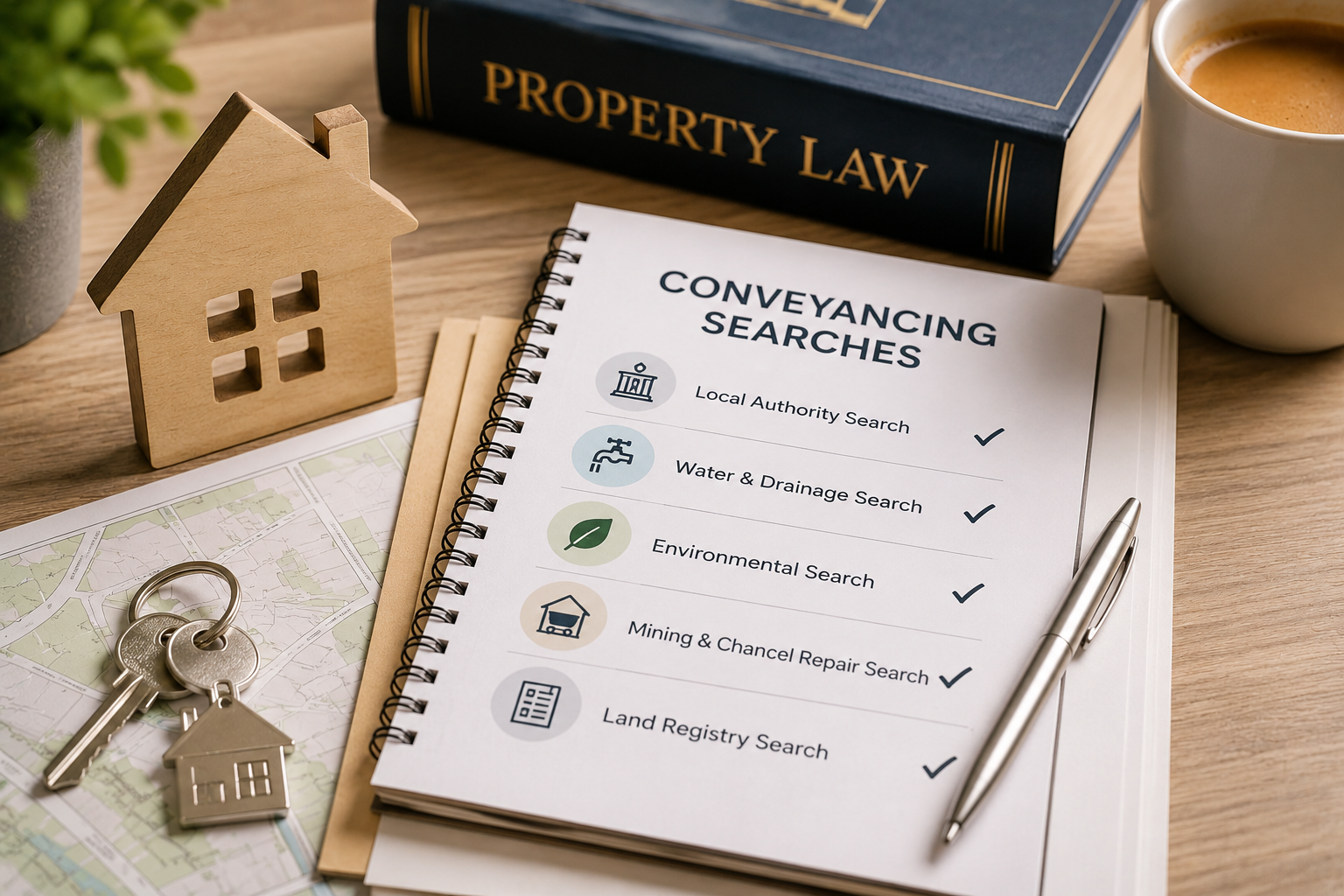
- Local authority search (LLC1 and CON29): covers planning history, building regulation approvals, road adoption status, and entries on the Local Land Charges Register
- Water and drainage search (CON29DW): confirms mains water connection, sewer connection, and the location of public drains within the property boundary
- Environmental search: assesses flood risk, land contamination, and ground stability, drawing on Environment Agency data
- Chancel repair search: checks for historical liability to contribute to the repair of a Church of England chancel in certain older parishes
- Coal mining search: required for properties in former coalfield areas, checking for mine workings, shafts, or subsidence risk
- Tin and metal mining search: relevant mainly in parts of Cornwall and Devon, checking for historical mine workings
- Flood risk search: sometimes commissioned separately or as an add-on where flood risk is a particular concern
- HS2 or infrastructure proximity search: relevant for properties near major transport or infrastructure schemes
- Land Registry search: confirms current registered ownership, boundaries, and any charges or restrictions on the title
- Highways search: confirms whether the road serving the property is publicly maintained or privately owned
What does a local authority search reveal?
The local authority search is the most important check in most transactions and is made up of two parts. The LLC1 covers entries on the Local Land Charges Register, including listed building status, conservation area designation, and smoke control zones.
The CON29 form covers additional council enquiries, including planning permissions, building regulation approvals, whether the road outside the property is publicly maintained, and any nearby road schemes or infrastructure proposals. This search is submitted to the council where the property is located and can take between a few days and several weeks to return, depending on the local authority.
What does a water and drainage search show?
A water and drainage search, often carried out as a CON29DW, is submitted to the relevant water company for the area, such as Thames Water or Yorkshire Water. It confirms whether the property is connected to mains water and the public sewer.
The search also identifies the location of public sewers and drains within the property boundary, which matters if you plan to extend or alter the building. A public sewer running beneath a proposed extension can affect planning consent and may require the water company's permission before any work begins.
What risks does an environmental search identify?
An environmental search draws on data from the Environment Agency and commercial providers to assess risks including flooding, land contamination, and ground stability. It is not a statutory requirement in England and Wales, but most mortgage lenders require one as a condition of the loan offer.
The search typically covers flood risk from rivers, coastal sources, and surface water, along with contamination from former industrial use, landfill proximity, and radon gas exposure in certain regions. A poor result does not necessarily prevent a purchase, but it may affect insurance costs or require further investigation.
The table below compares the three core searches most buyers in England and Wales will need.
| Search | Carried out by | Typical turnaround |
|---|---|---|
| Local authority search | The relevant local council | A few days to several weeks |
| Water and drainage search | The local water company | A few days to two weeks |
| Environmental search | Environment Agency data and commercial providers | Usually returned within a few days |
When is a chancel repair search needed?
A chancel repair search checks whether a property falls within a parish where a historical liability to contribute to the repair of a Church of England chancel might still apply. This liability is unusual today but can still affect a small number of older properties in parts of England.
Since October 2013, any such liability should be registered against the title, but gaps can still exist for older or unregistered titles. Most solicitors recommend indemnity insurance in place of a search where the risk is considered low, since the insurance is inexpensive and provides straightforward protection.
Why do search results matter before exchange?
Search results can reveal information serious enough to change your decision to proceed, renegotiate the price, or ask further questions before committing to exchange of contracts. A local authority search showing an unadopted road, for instance, could mean unexpected future repair costs.
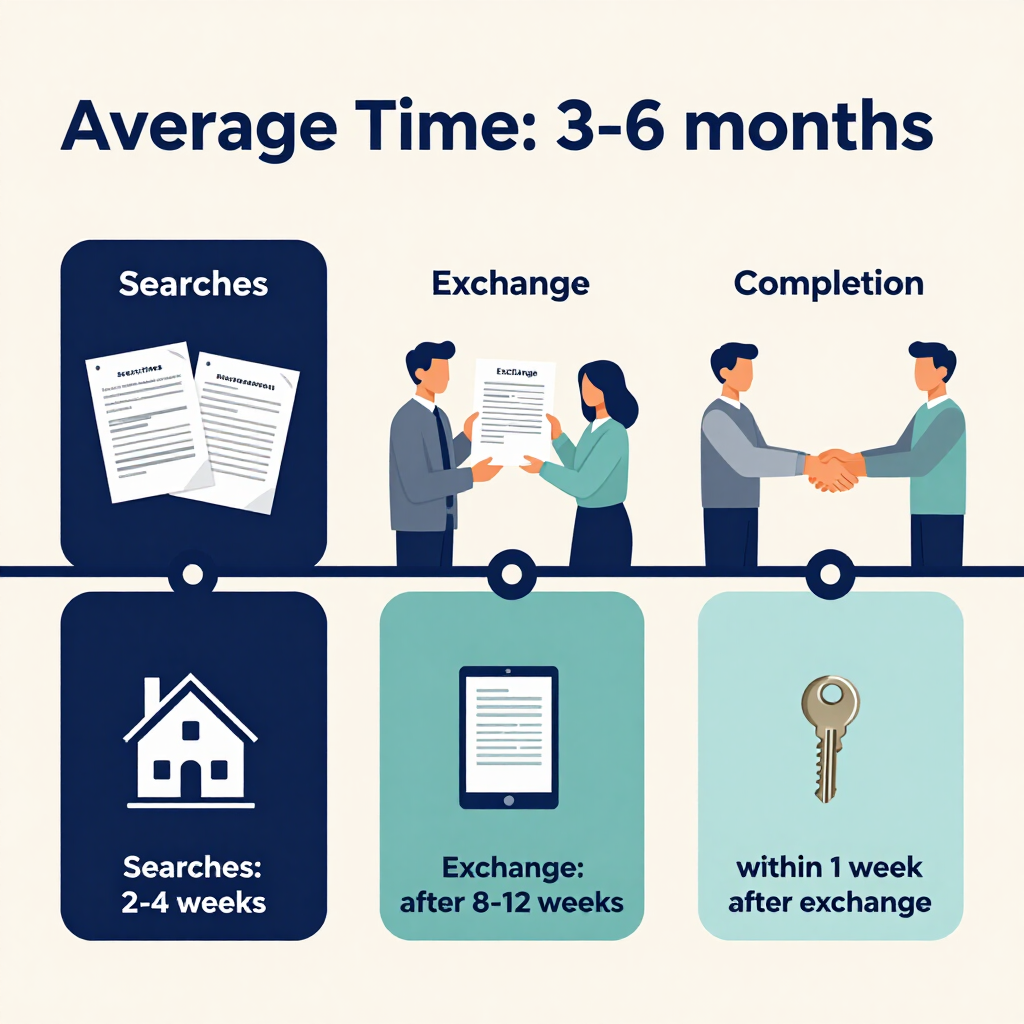
Because most searches take days or weeks to return, ordering them promptly after an offer is accepted helps avoid delay later in the transaction. Buyers who wait until shortly before the intended exchange date risk holding up their own purchase, and potentially the wider chain, while results are awaited.
Final words
Conveyancing searches exist to protect buyers from risks that are invisible during a viewing and absent from the title deeds. Ordering the right searches as early as possible, and reading the results carefully with your solicitor, is one of the most effective ways to avoid unwelcome surprises after completion.
Every property is different, and the searches that matter most will depend on its location and history. If you have questions about which searches apply to your purchase, our conveyancing team at KLR Solicitors is happy to help.
For a free consultation about buying your first home, please call our expert property team on
FAQs
Are conveyancing searches a legal requirement?
No, most conveyancing searches are not a statutory requirement in England and Wales. However, mortgage lenders almost universally require them as a condition of the loan offer, and solicitors have a duty to advise clients of the risks of proceeding without them.
How long do conveyancing searches take to come back?
Turnaround varies by search and local authority. A local authority search can take anywhere from a few days to several weeks, while water, drainage, and environmental searches are usually returned within a few days to two weeks.
Can I buy a property without carrying out searches?
Yes, it is possible to proceed without full searches, particularly for cash buyers, though this is generally inadvisable. Doing so leaves you without protection against risks such as flooding, contamination, or unresolved planning issues that could affect the property's value or your ability to use it as intended.
What happens if a search reveals a problem?
Your solicitor will explain what the finding means and the options available, which may include indemnity insurance, further investigation, renegotiating the price, or in serious cases withdrawing from the purchase. Not every issue found in a search is a reason to abandon a purchase.
Do I need a chancel repair search for every property?
No, chancel repair liability only affects a limited number of older properties in specific parishes in England. Many solicitors now recommend indemnity insurance instead of a dedicated search, since it is inexpensive and provides straightforward protection against this unusual historical liability.